Abstract
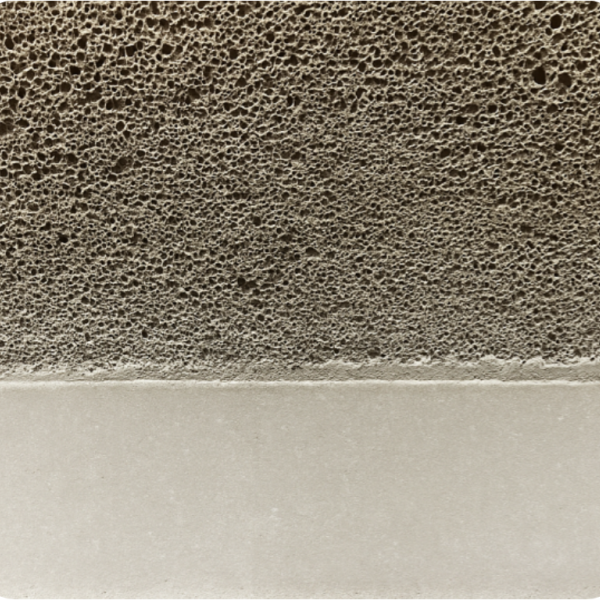
This project advances digital construction by developing low-carbon mineral foam for 3D-printed structural applications. By combining CO₂-based foam and LC3 (Limestone Calcined Clay Cement) binders with material-efficient design strategies, the project aims to enable climate-neutral and resource-efficient construction systems. To address key challenges related to foam stability during pumping, a novel near-nozzle production concept for printable CO₂-based mineral foam is investigated. This approach is explored through coordinated research on material formulation and custom print-head design.
At the micro- and meso-scale, high-resolution computed tomography and scanning electron microscopy are used to gain detailed insight into the internal pore structure of the mineral foam. These imaging datasets are analyzed using machine-learning methods to quantitatively characterize pore morphology and support systematic mix design optimization. In parallel, at the macro-scale, digital form-finding and topology optimization techniques are developed to generate load-efficient, 3D-printable geometries that minimize material consumption while maintaining structural performance.
Finally, representative prototypes will be fabricated using the CARE Physical Platform Prefab Plant, with a clear pathway toward upscaling and future on-site implementation. Overall, the project delivers an integrated multidisciplinary research platform, spanning material science, construction machinery, computational and structural design, for advancing sustainable digital construction.