Skip Navigation

From Vision to Reality Our Goals for Meaningful Change

The construction industry is one of the most resource- and energy-intensive sectors worldwide. It generates substantial waste and greenhouse gas emissions while also facing comparatively low productivity and physically demanding working conditions.

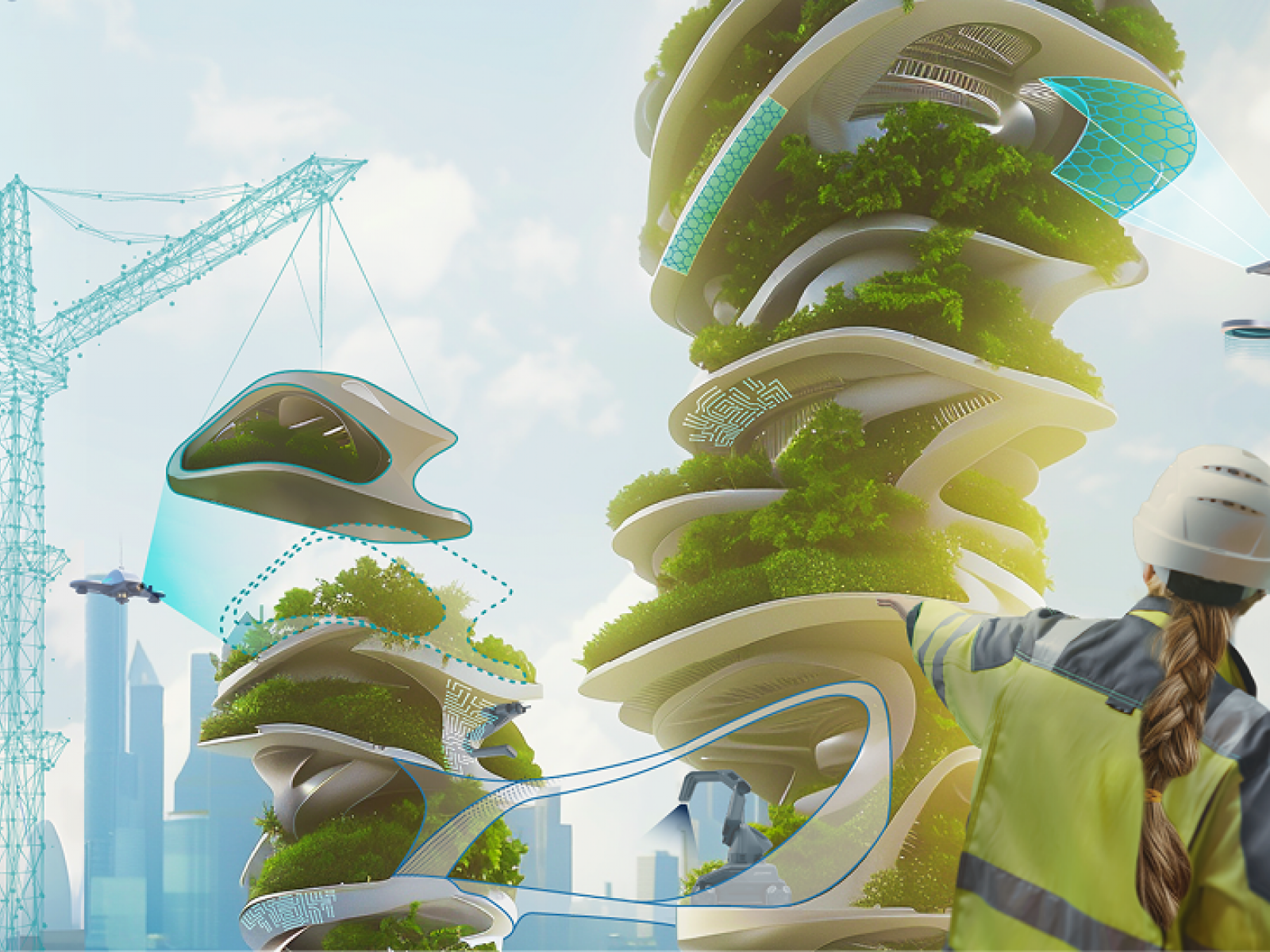
The Cluster of Excellence CARE aims to fundamentally transform key areas of construction by integrating innovative materials, pioneering design approaches and advanced manufacturing technologies.

Digital technologies and supportive regulatory, economic, and societal conditions are central to this transformation. CARE develops scalable, cost-effective and climate-resilient construction concepts that can be adapted to diverse regional contexts and help meet the global demand for a climate-neutral, resource-efficient, and productive construction sector.

To turn this vision into reality, CARE pursues five overarching goals:
Achieving Climate Neutrality

CARE develops climate-friendly, recyclable mineral-based composites as alternatives to conventional Portland-cement-based concrete, thereby supporting the transition towards net-zero greenhouse gas emissions in the construction sector. Designed for large-scale production, these materials will be integrated with innovative design and manufacturing approaches to achieve scalability and economic viability in both new construction and the retrofit of existing structures.

Enhancing Resource Efficiency

CARE pioneers solutions for the more efficient use of raw materials, energy, and water. Its approach combines material-minimized design, design for circularity, and predictive service-life management for both new and existing structures. By using secondary material streams from other industries, reusing construction materials and structural elements, and developing energy-efficient construction processes, CARE aims to reduce construction-related waste by up to 70%.

Increasing Productivity

CARE develops advanced computational methods and integrated digital workflows to ensure the continuous availability and exchange of data throughout construction processes, from planning and design to on-site execution. By combining end-to-end digitalization with automated manufacturing techniques and on-site robotic assembly, CARE seeks to double productivity and construction speed while reducing costs.

Improving Working Conditions

CARE seeks to improve safety and create more attractive working conditions by reducing physical strain and replacing heavy manual tasks human-centered technologies. It aims to make on-site construction accessible to a broader range of people, thereby helping to diversify and strengthen the workforce. CARE is also committed to minimizing the impacts of construction activities on neighboring communities. These impacts include noise and dust emissions, lengthy construction periods, and land use. Reducing them will contribute to a healthier and more livable built environment.

Boosting Resilience and Adaptivity

CARE develops robust and ductile materials together with adaptive and environmentally responsible design strategies to improve the resilience of structures to climate-related hazards and changing environmental conditions. This includes strengthening existing buildings and enabling simple, resource-efficient repairs through modular replacements. These innovations will extend the service life of structures and increase their capacity to adapt to future needs and environmental stresses.