Abstract
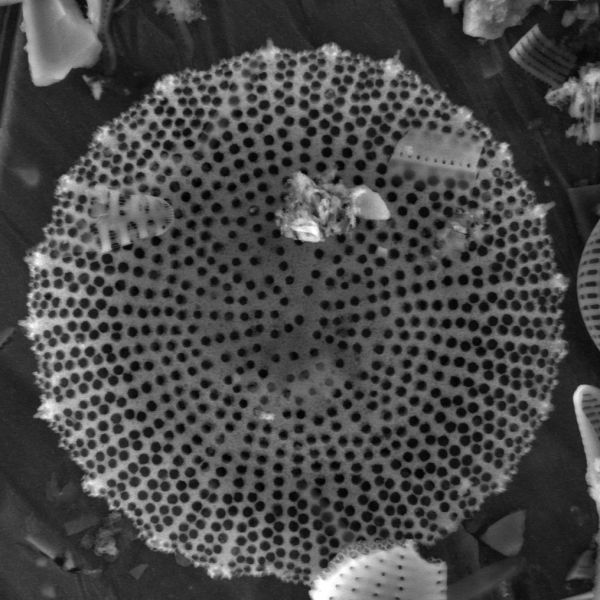
Diatoms – microorganisms common in fresh and sea water – form a silica-based exoskeleton, using specialized molecules that guide and stabilize the controlled precipitation of silicon dioxide (SiO₂). They produce a variety of organic substances such as exopolysaccharides (EPS), proteins, and lipids, fulfilling a variety of functions. Further, diatom biosilica (available in large scale as “Diatomaceous Earth”) has potential to serve as supplementary, cementitious material (SCM) since it contributes to grow highly reactive mineral phases. Targeted colonisation on inorganic (glass, basalt) fibre surfaces by diatoms results in the formation of biofilm-like layers that increase the fibres' surface roughness and chemical functionalisation and have a high affinity for silicon dioxide. Additionally, the implementation of diatoms will provide silica to improve the reactivity of calcium- and magnesium-based binders to form C-S-H (calcium silicate hydrate) or M-S-H (magnesium silicate hydrate) phases, respectively. These bonds contribute to increased durability by improving the overall structure and resistance to cracking, reducing the permeability of water, and enhancing the concrete's resistance to chemical attacks. In the proposed project we will select and cultivate respective diatoms and utilise them for concrete and inorganic fibre functionalisation contributing to the development of novel sustainable building materials.